
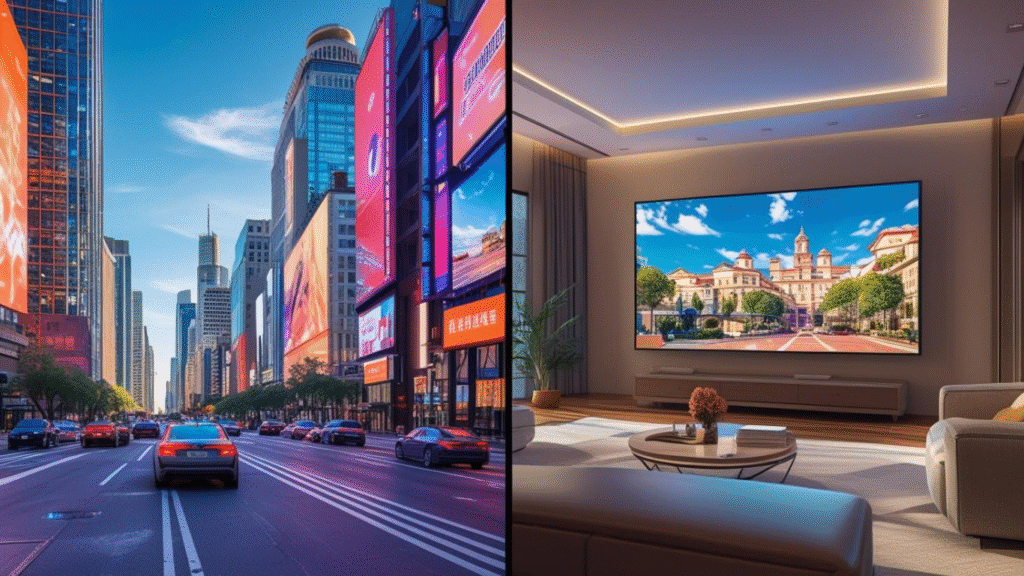
In today’s digital age, LED screens have become one of the most effective tools for advertising. Whether you’re promoting a product, brand, or event, LED displays deliver high-impact visuals that grab attention instantly. But before you invest, it’s important to ask: Should you choose an indoor or outdoor LED screen for your campaign?
This article breaks down the differences between outdoor and indoor LED screens, helping you decide which is the best fit for your advertising goals.
1. Location & Environment
The most obvious distinction lies in where the screen will be placed.
Outdoor LED Screens:
-
Designed to withstand rain, sunlight, dust, and extreme temperatures
-
Commonly installed on billboards, rooftops, stadiums, or building facades
-
Require higher brightness and protective casing
Indoor LED Screens:
-
Installed in controlled environments like malls, airports, showrooms, or event halls
-
Less exposure to weather elements
-
Generally smaller in size and resolution is higher
2. Brightness & Visibility
Outdoor Screens:
-
Must offer high brightness (≥5,000 nits) to remain visible under direct sunlight
-
Built with light sensors to auto-adjust brightness based on the time of day
Indoor Screens:
-
Require lower brightness (800–1,500 nits) for comfortable viewing in enclosed spaces
-
Glare control and contrast ratio are more important than raw brightness
3. Pixel Pitch & Resolution
Pixel pitch refers to the distance between two LED pixels. A smaller pixel pitch means higher resolution.
Indoor Use:
-
Typical pixel pitch: P1.5 to P3
-
Designed for close viewing distances (1–5 meters)
Outdoor Use:
-
Typical pixel pitch: P5 to P10
-
Optimized for longer viewing distances (10+ meters)
So, if your screen will be seen from afar (like a billboard), a lower resolution is acceptable. But for retail or exhibition screens viewed up close, sharp resolution is essential.
4. Installation & Maintenance
Outdoor Screens:
-
Require robust mounting structures to handle wind loads and vibrations
-
Must be waterproof (IP65 or higher)
-
Maintenance is more complex due to exposure to external conditions
Indoor Screens:
-
Easier and quicker to install
-
Less wear-and-tear over time
-
Lower maintenance costs
5. Cost Considerations
-
Outdoor LED screens are generally more expensive due to weatherproofing, higher brightness, and larger size
-
Indoor screens are more cost-effective for smaller-scale campaigns or temporary use (like events or exhibitions)
However, choosing the wrong type for your environment could lead to higher long-term costs due to damage or poor visibility.
When to Use Outdoor LED Screens
-
Highway billboards
-
Large-scale events
-
Storefronts and building facades
-
Public squares and stadiums
When to Use Indoor LED Screens
-
Shopping malls and retail stores
-
Conference rooms and exhibitions
-
Restaurants, cafes, and showrooms
-
Transportation hubs (airports, train stations)
Choosing the Right Partner Matters
Whether you choose indoor or outdoor LED screens, working with a reliable partner is crucial for:
-
Proper screen selection and design
-
Professional installation
-
Ongoing maintenance and support
-
Content management system integration
Why Choose Meta Creative Indonesia
At Meta Creative Indonesia, we provide custom LED screen solutions tailored to your advertising environment. Our services include:
-
Indoor and outdoor LED screen rental or permanent installation
-
High-resolution, energy-efficient LED technology
-
Smart control systems and content management
-
Full support from planning to post-installation
We help businesses deliver impactful advertising with reliable, durable, and visually striking LED displays.
Conclusion
Choosing between indoor and outdoor LED screens depends on your location, audience, and campaign goals. By understanding the technical and environmental differences, you can make an informed decision that maximizes both visibility and ROI.
🔗 Still unsure which LED screen is right for your ad? Contact Meta Creative Indonesia for expert consultation and customized LED screen solutions.