
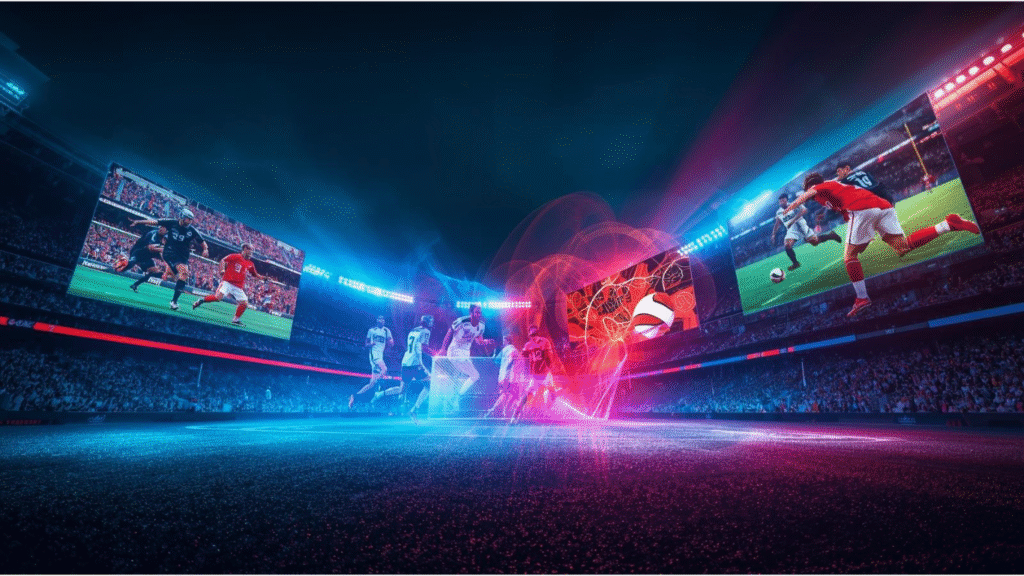
The event industry is evolving faster than ever, driven by the rapid rise of digital technology. In recent years, the combination of LED screens with Augmented Reality (AR) and Virtual Reality (VR) has fundamentally changed how audiences experience events. Today’s attendees expect more than standard presentations—they want immersive, interactive, and visually captivating environments that make events memorable and engaging.
LED screens act as the visual backbone of modern productions, while AR and VR provide the digital layering that brings content to life. Together, these technologies create immersive experiences that redefine events across industries, from concerts and exhibitions to corporate conferences and product launches.
This article explores how LED screens integrate with AR and VR to create groundbreaking immersive events, and how the future of event production is being shaped by extended reality (xR) environments.
1. Understanding the Role of LED Screens in Immersive Events
LED screens have become essential equipment in modern event production. With advancements in LED panel resolution, brightness, and color accuracy, visual effects now appear more realistic and impactful than ever.
LED displays are used in:
– Main stage backdrops
– 360° LED tunnels
– Immersive LED rooms
– Curved LED walls
– LED floors
– Hanging LED cubes
– LED arches and scenic structures
Their modular design allows creators to shape LED screens into creative forms that enhance the environment beyond traditional flat screens.
By delivering deep blacks, vibrant colors, and high dynamic contrast, LED screens act as the perfect canvas for AR and VR overlays.
For high-end immersive LED installations, event organizers often collaborate with specialists such as Meta Creative Indonesia, whose solutions can be explored at https://metacreative.co.id.
2. How AR Transforms LED Screen Content
Augmented Reality overlays digital elements onto real-world environments. When combined with LED screens, AR creates a hybrid environment where physical and digital elements interact seamlessly.
Examples of AR in Events:
– Virtual product demos appearing on LED backdrops
– Digital objects interacting with live performers
– Real-time holographic effects
– Animated charts for conferences and corporate events
– AR-enhanced stage performances
AR creates a dynamic layer of storytelling, giving creators the ability to illustrate abstract concepts, create fantasy environments, or display interactive graphics with precision timing.
Why AR Works So Well with LED Screens
LED screens provide a realistic background with real lighting, making AR visuals feel more integrated. Cameras capturing the event can see both LED and AR elements simultaneously, producing visually stunning results for livestreams and recorded footage.
AR also enhances audience engagement by enabling:
– Real-time interaction
– Multi-sensory effects
– 3D animations synchronized with stage performances
This makes performances more immersive and attention-grabbing.
3. VR and LED Screens: Creating Deep Immersion
Virtual Reality transports audiences into entirely different environments using headsets. When VR is integrated with LED screens, creators can produce hybrid experiences where:
– The audience experiences VR content
– External viewers see synchronized LED visual effects
– LED panels simulate environmental changes
For example, a VR travel exhibition might allow visitors to virtually explore a destination while surrounding LED screens simulate weather, landscapes, or movement. This creates a fully immersive sensory experience.
VR Combined with LED Creates:
– Interactive 360° experiences
– Immersive training simulations
– Futuristic product demonstrations
– Virtual automotive showcases
– Digital theme park environments
VR’s strength lies in full immersion, while LED screens extend this immersion to the audience outside the headset.
4. The Rise of xR (Extended Reality) Studios
Extended Reality (xR) is the next evolution of combining LED screens with AR and VR. xR studios create immersive digital production environments that replace traditional green screens entirely.
What Makes xR Studios Revolutionary?
Instead of filming actors in front of a green background, xR uses LED walls and LED floors to generate real-time 3D environments. Camera tracking synchronizes the virtual background with camera movement, creating a realistic sense of depth.
This technology is now used in:
– Music videos
– Commercial shoots
– Virtual concerts
– Corporate broadcast productions
– Worldwide live streaming events
– Hybrid conferences
Some of the biggest entertainment companies use xR to create realistic environments without traveling to physical locations. This brings enormous cost savings and creative flexibility.
Companies in Indonesia, including Meta Creative Indonesia (https://metacreative.co.id), are beginning to develop xR production environments to meet rising demand.
5. AR & VR for Corporate and Commercial Events
AR and VR are widely used in commercial events because they allow companies to showcase products in new and interactive ways.
Applications Include:
– Virtual product tours
– AR-enhanced keynote presentations
– VR simulation booths
– Virtual training modules
– Architectural visualizations
– Immersive branding environments
Combining LED screens with AR/VR makes it possible to demonstrate complex products—such as machinery, buildings, or software—in visually stimulating formats.
Brands use these technologies to stand out from competitors and deliver memorable experiences to clients and investors.
6. How LED, AR, and VR Elevate Concerts and Entertainment
The entertainment industry was one of the first to embrace AR and VR. Combined with LED screens, these technologies elevate stage performances in ways that were previously impossible.
Examples in Concerts and Festivals:
– Virtual creatures flying across LED backdrops
– AR-generated environments synchronized with songs
– Real-time visual effects reacting to music
– VR-enhanced audience experiences
– LED floors transforming based on stage choreography
Performers can interact with digital elements in real-time, creating a futuristic visual performance.
Music festivals use AR to create dynamic branding, complex light shows, and real-time crowd interaction. LED screens serve as the framework that unifies these effects into a harmonious visual experience.
7. LED Screens + AR for Exhibitions and Trade Shows
In exhibitions, visitors expect interactive booths that attract attention. LED screens with AR capabilities create:
– Holographic product showcases
– AR-enhanced digital catalogs
– 3D virtual walkthroughs
– Motion-triggered visuals
– Interactive customer engagement platforms
These tools increase booth traffic and make the brand more memorable. AR content on LED walls draws visitors from afar, making it ideal for exhibitions with high competition.
8. The Technical Infrastructure Behind LED + AR + VR Events
Creating immersive events requires precise technical integration. To combine LED screens with AR and VR effectively, event producers rely on:
– High-resolution LED panels
– Real-time rendering engines (Unreal Engine, Notch, Unity)
– Motion tracking systems
– Camera tracking systems
– Powerful media servers
– Multi-layer video processing
– High-bandwidth networking
Professional event providers integrate all these systems into a cohesive workflow.
For example, Meta Creative Indonesia offers full AV and multimedia integration services, including LED installations and advanced interactive technologies. Visit https://metacreative.co.id for more details.
9. Benefits of Combining LED Screens with AR and VR
a. Immersive Storytelling
Audiences are more engaged when content is visual, interactive, and dynamic.
b. Stronger Branding Opportunities
Brands can visualize concepts creatively, making presentations more memorable.
c. Higher Audience Retention
Interactive visuals help attendees stay focused longer.
d. Enhanced Social Media Value
Immersive visuals encourage attendees to capture and share content online.
e. Improved Production Efficiency
xR studios reduce costs and logistics by replacing physical sets.
f. Customizable Environments
Creators can change scenes instantly without altering physical structures.
g. Competitive Advantage for Event Organizers
Offering immersive tech makes events stand out in a saturated market.
10. The Future of Immersive Events with LED, AR, and VR
The demand for immersive events will continue to grow as audiences seek deeper experiences. Future trends include:
– Metaverse-integrated events
– Fully virtual concerts with LED-backed holograms
– Hybrid AR/VR arenas for sports
– AI-driven LED visual effects
– LED floors with haptic feedback
– 3D volumetric captures in xR studios
As LED technology continues to improve in pixel pitch, HDR capability, and brightness, its combination with AR/VR will become even more seamless.
Event organizers that embrace this shift will be able to produce experiences that feel futuristic, interactive, and unforgettable.
Conclusion
The combination of LED screens with AR and VR has revolutionized immersive event experiences across entertainment, corporate, commercial, and broadcast industries. LED screens provide the physical foundation for dynamic visual effects, while AR and VR add layers of interaction and immersion that captivate audiences.
Today’s event attendees expect experiences that go beyond traditional presentations. By using LED, AR, VR, and xR technologies, event organizers can create visually stunning environments that leave a lasting impact.
For organizations looking to build immersive event production setups or develop advanced LED installations integrated with AR/VR, partnering with experienced providers is essential. Explore complete LED, AV, and lighting integration solutions at Meta Creative Indonesia: https://metacreative.co.id.
Immersive events are no longer the future—they are the standard. And with the ongoing evolution of digital technology, the possibilities will only continue to expand.